Managing and Monitoring Indoor Air Quality is a brand new project in our post-COVID world. The emergence of an easily transmissible respiratory virus, more awareness of pollution from major cities and industrial plants, better monitoring systems for acid rain and outdoor air quality, better technologies for HVAC in both hardware and software has allowed several industries to begin the prep-work for capitalizing on this new branch in the market.
Implementation of Advanced HVAC Systems:
Upgrade existing HVAC systems to include HEPA filters, UV light sanitization, and advanced climate control technologies.
Ensure regular maintenance and checks are performed to sustain optimal performance of the HVAC system.
Integrate smart automation in HVAC systems to monitor and adjust settings based on real-time air quality data.
Regular Monitoring and Reporting of Air Quality:
Install state-of-the-art indoor air quality sensors that can detect various pollutants like VOCs, particulate matter, CO2, and humidity levels.
Utilize IoT-enabled devices to continuously monitor air quality and integrate this data into a centralized management system for easy access and analysis.
Develop and implement a regular reporting system to track air quality trends and identify areas for improvement.
Employee Awareness and Engagement:
Create and disseminate educational materials about the importance of indoor air quality and its impact on health and productivity.
Conduct training sessions to educate staff on best practices for maintaining good indoor air quality, such as proper ventilation and the avoidance of activities that degrade air quality.
Encourage employee participation in maintaining a healthy indoor environment, including reporting potential issues and suggesting improvements.
Modern facility management practices are essential for maintaining and enhancing indoor air quality, which is crucial for the health and well-being of all building occupants. Implementing advanced HVAC systems, engaging in regular monitoring and reporting, and fostering an environment of awareness and participation among employees are all vital steps. As we continue to navigate a world with heightened awareness of airborne health risks, the role of facility managers becomes increasingly critical. By adopting these cutting-edge practices, facility managers can ensure their buildings are not only safe and compliant but also contribute positively to the health and productivity of everyone who enters them.
A business wants to always guarantee safety and security for every visitor, staff person, and contractor. We all know that safety and security can be measured through risk factors, and we know that the risk factors for every business whether storefront or digital is more than 0% always.
In todays world, we are beyond the brick and mortar regarding needs for safety and security. We have to consider both hardware and software alongside the balance between a businesses needs/duties and the potential financial crippling state of the art processes and procedures can inflict on a businesses bottom line.
Technology is not cheap. Good technology is exorbitant and typically not reasonable for the common consumer. At the pace of technological evolution comes also the safety and security risks that pair into the common person’s desire to make things more simple, seemingly more comfortable, and always in pursuit of being or becoming more efficient.
Here are some notes in consultation with a DoD representative through the International Facilities Management Association within the Atlanta Chapter.
Security and Cybersecurity Awareness
If, F=function,
Then, Risk= f (vulnerability, threat, asset value, mitigations)…
1. Have a computer on its own system and server if possible for all banking utilizing a two key system for accountability.
2. Do not bank if having multiple emails, multiple apps, or use browsers. Isolate all banking to an isolated system/internet/server.
Notes on General Risk Management:
⁃ Centralize and monitor admin controls. Always consider risk when sharing data outside of network.
⁃ All Risk factors are never 0. The goal should always be risk mitigation.
⁃ ROI is impossible to calculate with accuracy regarding IT, General Security, and General Cyber Security.
⁃ 10-15% is US average cost for IT cybersecurity related expenses. These numbers are assumed to increase over time as the world gets trained beyond average coding capabilities and AI assisted malware development.
Insurance takes clients based on a bet they won’t need it.
Hacking and Financial Risks:
locking up data for ransom
Manipulating or destroying data for Political/philosophical/personal attack
Intelligence collection or payouts
Create Two Key Systems for approval
Financial Hacking is a Global Business
2023 DoD noted 8 trillion lost in cyber hacking
Opening unfamiliar emails can be a portal to an entire system
AI, Automation, and Deep Faking is immensely cost effective and the attacker can be anywhere in the world
Criminals are lazy. Pay attention to lazy workers seeking unethical ROI
…Tool Makers, Tool Users, and Enablers…
Modern Hacking- the Cyber Kill Chain
1. Reconnaissance- Seeking victims
2. Weaponization- Malware Formation
3. Delivery- point of disruption at PDF/Email Link/Text Message Link/App Downloads
4. Exploitation- Access Granted.
5. Installation- Malware automatically installs itself and hides within a system
6. Command and Control- Data is duplicated and fully compromised
7. Actions on Objectives- Ransom
Information Technology (IT) vs. Operational Technology (OT)
Facility Managers are required and should be trained to operate in both worlds.
Life Safety Systems include all IT, Burglar Alarm Systems, Surveillance Systems, Fire Systems, and all associated hardware.
ICS/SCADA is Gear for Mass Ops.
FYI… Backup Data Frequently and Automatically to Avoid Catastrophe…
1. Schedule Test Security Functions Frequently
2. Imbed Systems for Recurring Ops to interact with systems
3. Protect Family Security and Financial Security with Intentional layers of protection.
4. Frequently remove Toxic Data and set as Recurring Ops (Data Hygiene) either monthly, quarterly, or annually depending on organizations needs.
5. Passwords are obsolete against Passkeys regarding Authentication.
Prompting Operational Directors to Analyze their current Digital Ecosystems for potential hazards and safety risks. Where does Google stand in International Safety, Security, and Corporate Usage for Singularity and Development?
Potential Hazards in Data Manipulation regarding donations. One protection method is flat rate donations as opposed to set percentages. Clean numbers are easier to scan for flags for quick scanning pattern recognition.
(MSSP’s)- Managed Security Service Providers
⁃ Consider Firewalls
⁃ Consider Intrusion Detection Services
⁃ Consider Life Safety and Fire Safety Systems
⁃ Explore Cyber Insurance depending on organizations needs
When it comes to choosing a T8 tube light the choices can be exhausting. In a competitive market there are countless options and choosing the right bulb will ultimately effect the mood and energy being given off by your entryway, hallways, offices, gathering spaces, common rooms etc.
Considering a building that has been renovated multiple times, refurbished countless times, and added/taken away from several times it may be time to consider singularity amidst what can evolve to be chaotic facilities maintenance and inventory.
In a world where anything can be ordered and delivered to your doorstep it can seem like a good idea to leave the warehouses of Amazon, Walmart, Home Depot, or Lowes to hold your items, but the truth is when it comes to maintaining and sustaining irresistible environments there is a critical need to have a reasonable amount of product in house. This does not mean to have thousands of lightbulbs on hand, but it can mean to hold a percentage worth. For example, if a floor of a building has 500 tubelights it may be worth it to hold about 5% worth that amount on hand in case of failures. So a case of 25 bulbs would be sufficient for the quick grab and go resolution.
Maintaining an updated inventory also allows the facilities personnel to respond quickly when needing to make orders prior to repairs or replacements, or even to prepare for larger electrical related projects.
Now, to talk about tube lights. T8 tube lights took over from the older T12 model saving both energy, maintenance costs, and radiation reduction. Fluorescent fixtures ruled the market for many years as troffer lights became common alongside drop ceilings in the average office/commercial space.
As 2005 came, along with smartphones and more common use of the internet, LED technologies emerged as fluorescent technology held the monopoly in the commercial construction supplies industry. As the years have gone by, the prices of LED have also gone…down. Nowadays, LED bulbs are close to the the price of fluorescent bulbs with no need for ballasts, and minimal needs for maintenance. Some LED bulbs, double, and even triple the life cycles of their comparative Fluorescent bulbs while also saving immense costs on utility bills which will make the accounting team/stakeholders ultimately happy.
Brands of popular tube lights range from Philips, Sylvania, PLT, Halco, Parmida, TCP, Luxrite and other less notorious but equal quality. Using a spreadsheet to compare costs, lumens, color, lifespan, and dimmability should be consulted with either a Facility Manager, Electrician, Designer, and/or a General Contractor to best fit application and needs of your facility.
When it comes to a specific property managed, there happens to be a large quantity of troffer lights mixing thirty years worth of different models of T8 and T12 fixtures. Considering a finite budget, there are several different approaches to maintaining and sustaining irresistible environments. One approach is to pay a large sum of money upfront to outsource all of the labor thus modernizing the entire building and campus to LED for immediate energy savings.
The other is to address the fixtures as they fail so to not be replacing fixtures that may potentially have a few months or years left in their life cycle. Considering the intent to be a good steward of budget and resources, it makes sense to address portions at a time as they show aging or functionality issue.
For example, if a hallway has five rooms and were all installed around the same time, but the adjacent hall was an add on to the building ten years later, then it can be assumed that the fixtures in the first hall will die before the fixtures in the adjacent hall or hallway two.
As the fixtures in hallway one begin failing it is in good practice to address one entire room at a time. Budgeting, record keeping, and time management become impossible if maintenance falls into the philosophy and practice of reactive maintenance. Ultimately the organization, owners, or stakeholders will be much happier to know that the unseen work of record keeping and asset protection is organized and thoughtful.
There are some fixtures that allow for integrated lighting where even light bulbs become obsolete, but the difficulty with managing those fixtures is that if the lights fail (and they will), or the driver fails due to a power surge, then the entire fixture has to be changed out which is extremely wasteful.
It is hard to fathom a world without light bulbs, and so when it comes to choosing and managing which type of tube light to use it is worth diving a little deeper. For reference, this post is specifically catering towards a 48 inch tube light with troffer light fixtures that will either fit one, two, three, or even four bulbs. These generations of fixtures may have compatibility with 32W to 40W ballast compatibility and also have either one, or two ballast if originally designed for fluorescent bulb application.
A ballast bypass is normal today as LED conversions sweep through commercial spaces. Ballasts were initially required for supplying the appropriate amount of energy from the panel to the fixture and through the light bulb, but nowadays a direct line into the fixture is possible due to the led driver technology.
Bypassing the ballast to a fixture, as long as the fixture is not blackened, or damaged from years of overheating and use, is recommended to cut down future maintenance costs, and to encourage the LED bulb whether type A, B, or Hybrid to function to its fullest.
Considering a building with several generations a fixtures, it makes the most sense to use a Hybrid LED bulb. This form of LED can work with or without a ballast, it can work whether one end is hot and the other neutral, or if both are tied into a single side. These bulbs are also compatible with almost any style of T8 Ballast, but if there are any hesitations or questions it is recommended to seek professional consultation with a licensed electrician.
The go to bulb when dealing with an older commercial building or frequently renovated campus is the Hybrid LED 48 inch tube light. When it comes to color, it is good to use a Cool White or 3900K-4200K temperature. Cool white gives off the most reflective spectrum of lighting without compromising those with sensitive eyesight. Daylight would be considered too strong for people who have such visual sensitivities.
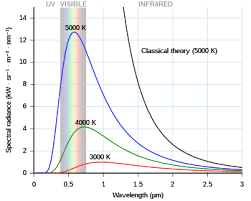
Planck’s Constant gives the best visual representation of why Cool White or 4000K seems to be the best representation for commercial lighting settings. It is professional, formal, and clean lighting that allows the colors of furniture, flooring, paint, and other fixtures to reflect their natural coloration. A soft white lighting is typically common and cheaper, but it does not allow the reflections of many unique colors that tend to draw people in and even assist in mood stabilization.
There are many accounts of designers, or managers who choose a wall color for their office because it is relaxing, but then end up in debates with the painter or Facility manager because, “it does not look right”, or “this is not the color I chose”. For most issues regarding a dislike in color choices it most of the time comes down to the lighting in the room. If the soft white yellowish light is reflecting across a light blue it will pull out greens that can be distasteful to some. This is not an attempt to be a designer, but simply a way to troubleshoot the root of common issues in coloring problems.
And so, when it comes to retrofitting a commercial building to LED while remaining conscious of a budget it is good to lean on singularity. That means singularity in the type of bulb, the type of color, and the type of lens. The preferred modern tube light would be a T8 Hybrid style LED bulb that will fit in about every fixture at a Cool White temperature. This will truly allow your facilities team to keep your facilities both immaculate and irresistible.
As always, God Bless,
James Arthur Ferguson
Below is a picture of a Parmida tube light and an image of Planck’s Constant.
Facility Management touches several fields in which expert consultation is recommended and in many ways required. Electricians, Plumbers, and HVAC technicians are just a few fields that the common Facility Manager will come across when handling operations of a commercial building.
When it comes to acclimating building through climate control it is critical to balance out several realities present in the decision of how to acclimate a building. First, it is important to understand that the HVAC systems installed and managed need to be functional year round. Whether in a seasons that requires heating or cool it is important to know that your units are going to withstand seasonal changes year round.
Preventive Maintenance, or PM Agreements, with legitimate HVAC companies is a requirement for every commercial building unless dealing with several hundred thousands square feet of real estate where a licensed HVAC technician on staff may be required. Quoting three or more local companies is ideal when choosing the best candidate to serve your given building or campus.
If the units are functional, and the building engineers have signed off that the amount of units installed are adequate for climate control, then the next step is finding a thermostat that is going to work with the cycles of business operations. Nowadays, wifi capable thermostats are the go to when shopping. Another note is to ensure that whichever thermostat is available is also readily able to be purchased in large quantities. Purchasing a brand new top of thermostat, or a brand new model of thermostat can be risky because there may be underlying issues not worked out by the manufacturer.
The best thermostats are the ones that are both wifi capable (meaning that they can be viewed remotely) and also five plus years on the market, so there can be a better guarantee that bugs or annoying nuances have been worked out. Also, similar to video game consoles, by waiting two plus year it allows the cost to balance out to avoid being a part of the first wave of purchasers who are essentially allowing the company to break even on the investment for producing the new model.
Touch screen thermostats and lockable thermostats are also a major benefit when it comes to deterring unwanted users from accessing and changing the settings of thermostats designed to acclimate certain environments. Setting up training and offering lessons to those interested is a great practice to prevent gatekeeping from these technologies and operations. The overall flow of day to day operations will be much more seamless if several trained persons are capable of accessing and programming thermostats dependent on needs.
Now, when it comes to understanding the function of HVAC systems try to imagine that the units providing climate control are the lungs of the building. Just as all people breath in and breath out, so should the HVAC systems properly acclimate and circulate airflow to prevent stagnant air, overworking certain units, and most importantly reducing utility bills.
Comfort is absolutely the priority for any Facility Manager responsible for climate control inside a workplace, but there are limits and reasonable windows are temperature that go beyond comfort. Traditionally 68 degrees Fahrenheit to 76 degrees Fahrenheit are the recommended temperatures for a commercial space. If cutting maintenance costs it could be widened to 65 degrees Fahrenheit to 78 degrees Fahrenheit. Thirteen degrees is a big window, but depending on where the building is geographically it is still a major win for science to be able to climate control any indoor space. Long gone are the days of wood burning heaters to stay warm and burrowing in self made holes to keep cool.
68 degrees to 76 degrees is the most reasonable for comfort, but even some commercial businesses prefer an even tighter window. Aside from grocery stores, or industrial plant need that require freezers and precise humidity control, the average commercial office space relies on industry standard Roof Top Units or Split Systems to do the job. If the preferred cooling temperature is 68 degrees to 72 degrees it can be managed through consistent and constant acclimation, but it should be budgeted accordingly because ultimately it will cost.
When it comes to programming a thermostat, try to keep entire floors, wings, and if possible the whole building within the same range of temperatures. This will prevent unwanted airflow, drafting, and air pressure issues from arising in mysterious ways. The best practice is to decide which range of comfort is best suited for your particular tenants or staff and then to acclimate the entire building to that setting.
Reducing maintenance costs and upkeep will be present year by year as long as a credible HVAC company is performing required quarterly or biannual maintenance, and doors/windows are not left open for long periods of time regularly. Obviously, consult a professional prior to setting or programming all of the thermostats so utility bills can be measured accordingly year by year.
The life cycle of each unit is dependent on the routine preventive maintenance, and the only way to try and guarantee year round functionality is to have the system monitored by a Facility Manager on a weekly, monthly, and at a minimum quarterly basis. The goal should be for the Facility Manager to catch an issue before a tenant, or guest. Part of sustaining and maintaining irresistible environments is sustaining and maintaining distraction free environments. Temperature discomfort can be a major distraction for the modern person.
The biggest cost for a commercial building is when the building has to be heated ten plus degrees or cooled down ten plus degrees. Some people believe that the best practice is to have an occupied schedule and then an unoccupied schedule. If living in an area that does not experience major temperature changes, then this is a reasonable approach, but if the building is located in a place that experience major temperature and or humidity changes, then the most cost efficient approach is to keep the entire building acclimated within a range of seven or more degrees.
The most cost efficient method to reduce utility bills is to not use the units at all. Keep the units off, permanently. Since this is a sure way to create potential humidity issues, odor issues, and discomfort, it does not seem that this is a viable option. With that, keeping the building acclimated is the best way to create consistency year to year along with formatting extremely accurate numbers for budgeting which will ultimately make the accounting department and the stakeholders of the business very happy.
Another major benefit of keeping the commercial space acclimated with consistency across the board is that it will prevent the psychological trick of thinking one is too hot or too cold. There are countless stories of people moving from one room to another and just a degree difference can lead to a slew of complaining. Having the entire building acclimated to the same window of degrees will reduce these complaints.
Also, another major benefit of keeping the commercial space acclimated is that it allow the Facility Manager to act efficiently and quickly when it comes to troubleshooting a potential issue. If a room is not within the range, then the building may be able to support adjacent rooms more efficiently by slowly drafting towards the unacclimated area. If a thermostat within a room is showing out of range, then it can be quickly assessed that there is either an issue with the thermostat itself or the unit.
Hundreds of thousands of dollars are lost across any given state that makes outcalls to HVAC companies to resolve issues that are not truly issues. Programming thermostats incorrectly, batteries not being changed out, coin cell batteries not being replaced, thermostats competing to acclimate adjacent areas, post refurbishment or renovation issues etc can all result in countless business calling in expensive technicians to resolve problems that a college kid could figure out as long as there is consistency in the system.
In summary, a wifi controlled thermostat, preferably touch screen, set to an agreed upon window of degrees from the businesses’ leadership to best fit the environment of the business, and then scheduling the entire building to be acclimated to that window of degrees is the best way to maintain and sustain irresistible environments. Being able to monitor consistency year by year will allow for subtle corrections to be made depending on budget or unforeseen requirements implemented beyond the control of the Facility Manager.
Once again, consult a professional to figure out which window of degrees is best for your business. Also, if electronics or electrical equipment is present and in plentiful supply, then a lower set of degrees may be required to prevent overheating, but a licensed engineer would need to be consulted if involving that type of setup.
Typically 3000k-5000k is considered industry standard for lighting in commercial spaces. 4000k, or Cool White, is the middle ground between yellowish, too-dark, off-putting environments and blinding, headache inducing, sunbeam level lighting. Cool White, according to Planck’s Constant is great at allowing the full spectrum of light to reflect throughout office spaces without overpowering those with light sensitivities.
Although there is direct correlation between brighter lights and productivity, there is also balance when trying to be productive in a work environment that requires balance. A company like Amazon or UPS might not be as keen on wanting workers relaxing and pacing, and stores like Walmart and Target also do not intend for their clientele to be in their stores for too long. The 5000k-7000k temperature of Daylight is honestly great for these environments, but what about the common office space or gathering space?
When it comes to emotional/mood lighting 3500k or Soft White is typically the brightest you want to be. Although it becomes more yellow in nature the softer light is better for achieving a more relaxing environment. If you want coworkers and employees taking frequent naps during work hours, then Soft White and lower is what you want!
Any office lamps, or mood lighting should be set to that 2700K-35000k, but this is not ideal for house lighting. House lighting should be clear and clean white light that is only possible with 4000K Cool White lighting and up. One major benefit to Cool White lighting is that dirt, grime, dust, and streaks will be more noticeable. This may put some stress on managing Janitorial, but if you are paying a mini-fortune for cleaning, you want their work to be showcased to others.
When it comes to maintaining and sustaining irresistible environments, part of the role is creating distraction free environments. Having clean and clear Cool White lighting allows every tenant, staff member, volunteer, visitor, or clientele to fully embrace the environments that the organizations spends a fortune on to provide.
Having the full spectrum of light at your disposal will allow your designers to be able to fully excel at their job of creating intentional spaces whether for in-person meetings, conference calls, digital meetings, one on ones, presentations, or generic office work. Being able to fully see is directly related to productivity.
Several studies regarding Fluorescent Lighting compared to modern LED lighting show that Fluorescent lighting causes…
Migraines
Sleep-Pattern Disruptions
Cancer
Though there is still a lot to learn about LED lighting in general, the environmental benefits of people not having to dispose of mercury filled glass is a major bonus to the LED lighting game. Fluorescent is cheap upfront, but the back end cost far outweighs the now pennies increase on its LED counterpart. Along with LED lighting becoming much more affordable than back in 2005, the new LED technologies are far more compatible with many different models and generations of Fluorescent Lighting Fixtures.
At this point in this, there is very little debate on the side FOR Fluorescent. As the years pass there may eventually be something even better than LED, but until then it can be known that LED is the absolute best choice for both Residential and Commercial lighting. This topic though is purely on the bias that 4000K, Cool White, LED lighting is the primary choice for all House lighting in the average commercial setting.
A photo from Upshine showcases the difference between 3000K, 4000K, and 5000K lighting. If it was not known that these were examples in lighting, then one would assume that there are three distinct wall colors. The truth is that it is the same wall color. In a previous post it was mentioned the debate painters typically have with clients in regards to unhappy results of paint color selection when the common causality for frustration falls on the lighting in the room.
Upshine Website also notes that the best lighting for office spaces is Cool White. Modern Place suggests 4500K as the best for office spaces, which I lean towards more than the other direction, but even 4500K can be a little too harsh for those with light sensitivities.
Though Hospitality generally notes between 3000K-3500K like in lobbies of hotels there is a general desire to make people feel like they are at home. In the general office space setting there should be a desire for hospitable comfort, but there is also a need for a formal presentation of, “we are here for a purpose”. A hotel is designed to make you feel like you are getting away, whereas a workplace should feel like I am here to do work.
Even hospitals will lean towards less than 4000K because of the natural tension associated with going to the doctor’s office. These types of subtle manipulations in stress reduction should not be as required for a daily work environment.
Ultimately, the person in charge will decide which light is better in which environment, but when it comes to industry standard for the common office space the best selection is LED, Cool White ranging from 3900K-4200K. Cool White is the best common ground between being too yellow or too blue.
Regardless, do your own research if needed, and always consult a licensed electrician before adding or taking away any electrical components of your facilities.
As Always, God Bless,
James Arthur Ferguson
Below is a picture showing the 3000K Soft White on the left which has more yellowish hue, 5000K Daylight on the right which has more blueish hue, and 4000K Cool White in the center showing a neutral blend and the purest form of the wall color reflecting from behind.
When it comes to choosing a T8 tube light the choices can be exhausting. In a competitive market there are countless options and choosing the right bulb will ultimately effect the mood and energy being given off by your entryway, hallways, offices, gathering spaces, common rooms etc.
Considering a building that has been renovated multiple times, refurbished countless times, and added/taken away from several times it may be time to consider singularity amidst what can evolve to be chaotic facilities maintenance and inventory.
In a world where anything can be ordered and delivered to your doorstep it can seem like a good idea to leave the warehouses of Amazon, Walmart, Home Depot, or Lowes to hold your items, but the truth is when it comes to maintaining and sustaining irresistible environments there is a critical need to have a reasonable amount of product in house. This does not mean to have thousands of lightbulbs on hand, but it can mean to hold a percentage worth. For example, if a floor of a building has 500 tubelights it may be worth it to hold about 5% worth that amount on hand in case of failures. So a case of 25 bulbs would be sufficient for the quick grab and go resolution.
Maintaining an updated inventory also allows the facilities personnel to respond quickly when needing to make orders prior to repairs or replacements, or even to prepare for larger electrical related projects.
Now, to talk about tube lights. T8 tube lights took over from the older T12 model saving both energy, maintenance costs, and radiation reduction. Fluorescent fixtures ruled the market for many years as troffer lights became common alongside drop ceilings in the average office/commercial space.
As 2005 came, along with smartphones and more common use of the internet, LED technologies emerged as fluorescent technology held the monopoly in the commercial construction supplies industry. As the years have gone by, the prices of LED have also gone…down. Nowadays, LED bulbs are close to the the price of fluorescent bulbs with no need for ballasts, and minimal needs for maintenance. Some LED bulbs, double, and even triple the life cycles of their comparative Fluorescent bulbs while also saving immense costs on utility bills which will make the accounting team/stakeholders ultimately happy.
Brands of popular tube lights range from Philips, Sylvania, PLT, Halco, Parmida, TCP, Luxrite and other less notorious but equal quality. Using a spreadsheet to compare costs, lumens, color, lifespan, and dimmability should be consulted with either a Facility Manager, Electrician, Designer, and/or a General Contractor to best fit application and needs of your facility.
When it comes to a specific property managed, there happens to be a large quantity of troffer lights mixing thirty years worth of different models of T8 and T12 fixtures. Considering a finite budget, there are several different approaches to maintaining and sustaining irresistible environments. One approach is to pay a large sum of money upfront to outsource all of the labor thus modernizing the entire building and campus to LED for immediate energy savings.
The other is to address the fixtures as they fail so to not be replacing fixtures that may potentially have a few months or years left in their life cycle. Considering the intent to be a good steward of budget and resources, it makes sense to address portions at a time as they show aging or functionality issue.
For example, if a hallway has five rooms and were all installed around the same time, but the adjacent hall was an add on to the building ten years later, then it can be assumed that the fixtures in the first hall will die before the fixtures in the adjacent hall or hallway two.
As the fixtures in hallway one begin failing it is in good practice to address one entire room at a time. Budgeting, record keeping, and time management become impossible if maintenance falls into the philosophy and practice of reactive maintenance. Ultimately the organization, owners, or stakeholders will be much happier to know that the unseen work of record keeping and asset protection is organized and thoughtful.
There are some fixtures that allow for integrated lighting where even light bulbs become obsolete, but the difficulty with managing those fixtures is that if the lights fail (and they will), or the driver fails due to a power surge, then the entire fixture has to be changed out which is extremely wasteful.
It is hard to fathom a world without light bulbs, and so when it comes to choosing and managing which type of tube light to use it is worth diving a little deeper. For reference, this post is specifically catering towards a 48 inch tube light with troffer light fixtures that will either fit one, two, three, or even four bulbs. These generations of fixtures may have compatibility with 32W to 40W ballast compatibility and also have either one, or two ballast if originally designed for fluorescent bulb application.
A ballast bypass is normal today as LED conversions sweep through commercial spaces. Ballasts were initially required for supplying the appropriate amount of energy from the panel to the fixture and through the light bulb, but nowadays a direct line into the fixture is possible due to the led driver technology.
Bypassing the ballast to a fixture, as long as the fixture is not blackened, or damaged from years of overheating and use, is recommended to cut down future maintenance costs, and to encourage the LED bulb whether type A, B, or Hybrid to function to its fullest.
Considering a building with several generations a fixtures, it makes the most sense to use a Hybrid LED bulb. This form of LED can work with or without a ballast, it can work whether one end is hot and the other neutral, or if both are tied into a single side. These bulbs are also compatible with almost any style of T8 Ballast, but if there are any hesitations or questions it is recommended to seek professional consultation with a licensed electrician.
The go to bulb when dealing with an older commercial building or frequently renovated campus is the Hybrid LED 48 inch tube light. When it comes to color, it is good to use a Cool White or 3900K-4200K temperature. Cool white gives off the most reflective spectrum of lighting without compromising those with sensitive eyesight. Daylight would be considered too strong for people who have such visual sensitivities.
Planck’s Constant gives the best visual representation of why Cool White or 4000K seems to be the best representation for commercial lighting settings. It is professional, formal, and clean lighting that allows the colors of furniture, flooring, paint, and other fixtures to reflect their natural coloration. A soft white lighting is typically common and cheaper, but it does not allow the reflections of many unique colors that tend to draw people in and even assist in mood stabilization.
There are many accounts of designers, or managers who choose a wall color for their office because it is relaxing, but then end up in debates with the painter or Facility manager because, “it does not look right”, or “this is not the color I chose”. For most issues regarding a dislike in color choices it most of the time comes down to the lighting in the room. If the soft white yellowish light is reflecting across a light blue it will pull out greens that can be distasteful to some. This is not an attempt to be a designer, but simply a way to troubleshoot the root of common issues in coloring problems.
And so, when it comes to retrofitting a commercial building to LED while remaining conscious of a budget it is good to lean on singularity. That means singularity in the type of bulb, the type of color, and the type of lens. The preferred modern tube light would be a T8 Hybrid style LED bulb that will fit in about every fixture at a Cool White temperature. This will truly allow your facilities team to keep your facilities both immaculate and irresistible.
As always, God Bless,
James Arthur Ferguson
Below is a picture of a Parmida tube light and an image of Planck’s Constant.



 Strategic Management and Inspections of Facilities